Wednesday, July 10, 2013

A Basic knowledge about the Sim Card


A subscriber identity module or subscriber identification module (SIM) is an integrated circuit that securely stores the International Mobile Subscriber Identity (IMSI) and the related key used to identify and authenticate subscribers on mobile telephony devices ,such as mobile phones and computers.

It is also a portable memory chip used mostly in cell phones that operate on the Global System for Mobile Communications (GSM) network. These cards hold the personal information of the account holder, including his or her phone number, address book, text messages, and other data. When a user wants to change phones, he or she can usually easily remove the card from one handset and insert it into another. SIM cards are convenient and popular with many users, and are a key part of developing cell phone technology.

Sim Cards are of four (4) Types. Named as Below H1, H2, H3, H4

H1= You Will Get Normal Network On This Sim
H2= You Will Get Better Network On This Sim, Means Strong
H3= You Will Get More Better Network On This Sim, Means Stronger
H4= Normal, Better, More Better Is Nothing In Front OF This Sim.

Basically H4 Sim giving for Corporate Sim, Army Peoples etc. The Company doesn’t Provide H4 Sim To all User,because this Sim eat More bandwidth. For knowing Which Type of Sim is using Just Check Its Back Side and will Get the Sim No. and the Sim Type.

SIM cards are made in three different sizes to accommodate different devices. Most phones use mini-SIM or micro-SIM cards, which are quite small — the mini is 25 mm by 15 mm , and the micro is 15 mm by 12 mm.Full-sized cards are much larger, 85.6 mm by 53.98 mm , and are too big for most phones. All cards are only 0.76 mm thick, and the microchip contacts are in the same arrangement. This means that, with the proper adapter, the smaller cards can be used in devices designed for larger ones.

A SIM card offers security for both the user’s data and his or her calls. The cards can be locked, meaning that only someone who has the correct personal identification number (PIN) can use the card. If the phone is stolen, the thief cannot use a locked SIM or get any information off of it without the PIN.

Tuesday, July 9, 2013

What is Cancer?? how a look...


You talk about Cancer but do you know what it actually is ? 
Cancer is the uncontrolled
growth of abnormal cells in the body. Cancer grows out of normal cells in the body. Normal cells multiply when the body needs them, and die when
the body doesn't need them. 
Cancer appears to occur when the growth of cells in the body is out of control and cells divide
too quickly. It can also occur when cells forget how to die. 

Cancer can develop in almost any organ or tissue, such as the lung, colon, breast, skin, bones,
or nerve tissue. 

Causes of Cancer you should be aware of : Drinking excess
alcohol, Environmental toxins, such as certain poisonous mushrooms and a type of poison that can grow on peanut plants Excessive sunlight exposure, Genetic problems, Obesity

SYMPTOMS : The following symptoms can occur with most cancers: 

  • Chills
  • Fatigue
  • Fever
  • Loss of appetite
  • Malaise
  • Night sweats 
  • Weight loss 


For more details visit National Cancer Institute


Monday, July 8, 2013

How to Make an Origami Boomerang


Tips


  • Make sure it is sturdy.
  • You can use markers and crayons to decorate your boomerang.
  • Be sure to check if you missed anything.


Things You'll Need


  • Thick paper or cardboard
  • Scissors
  • Marker to draw the pattern
  • Markers and crayons to decorate


Wednesday, July 3, 2013

Use Mobile Camera As WebCam...


Many of my friends don't have webcam and they want to chat with Facebook video calling and hangout with friends on Google + and Skype. If you want to use your Mobile camera as a webcam but phone should be s60 Nokia Cell Phone with Camera and use your phone camera as web camera and have video calling and get hangout with your friends.

You need to install "SmartCam" software on ur PC & Phone
Click here

‎Step1:- Install SmartCam.exe on your Windows PC

Step2:- Install Smartcam on your Mobile
Click here


‎Step3:- Start up SmartCam on your PC and go to File-->Settings and check your connection and proceed next step.

Step4:- Start SmartCam on your phone and go to Options-- >Connect and it will ask you for server name and you need to type your PC IP address or your system name

How To Remove Facebook Advertisements


This Facebook: Cleaner removes many of the annoying ads and updates that unavoidably appear on your Facebook pages.


Facebook Tips/Tricks You Might Not Know

If you surf Facebook on daily basis or occasionally, chances are you’re already familiar with regular stuffs like add/delete friends, update statuses, walls and profile, add and explore pages & applications, etc, but there’s more..
This week we want to cover some interesting things you can do on (or with) Facebook; inclusive of tricks that are not documented or unknown to many, as well as tips to stay connected better with your friends. Without further ado, here’s 20 Facebook Tips/Tricks You Might Not Know. If you have interesting tips/tricks related to Facebook, please feel free to share in the comment box below.


1.How To Place Facebook Chat On Firefox Sidebar


Facebook Chat is cool, at least it allows you to send instant messages to online Facebook contacts. However I’m not really a fan of the chat bar being at the bottom of the page, what if I’ve left Facebook but still wants to remain chatting with my Facebook contacts? If you are using Firefox, you can place the Facebook Chat at the sidebar.


Step - 1
Look for Bookmarks on the top navigation. Select Organize Bookmarks…


Step - 2
Click New Bookmark... tab and enter the following:

Name: Facebook Chat
Location: http://www.facebook.com/presence/popout.php
Check Load this bookmark in sidebar.


Step - 3
Launch the Firefox sidebar, click Facebook Chat and start chatting with your Facebook contacts within Firefox.


2.How To "Friend" Someone On Facebook & Hide It From Your Status Updates


I’m sure that this has happened to you before. Someone you have ties to, whether it’s a co-worker, your boss, or even worse, a parent, has finally discovered social networking and wants to be your newest Facebook friend.
For me personally, that’s no big deal. I’m fairly open about my online activities. Everything I write, Digg, or otherwise share goes through my FriendFeed to my Twitter then ultimately onto my Facebook (my, that sounds naughty). Besides that, just about everyone I’d consider a co-worker is already on Facebook, and would have little issue about my other Internet activities.
Putting all that aside however, imagine for a moment that I worked at Domino’s Pizza and that I don’t want my boss to know that I just became a fan of Papa John’s (writing this one’s gonna make me hungry). Here’s what I would do to hide Facebook status updates and keep that fact confined to my closer friends:
On your Facebook home page, you should see the ‘Settings’ menu close to the search field on your upper-right. Open that menu and go to ‘Privacy Settings’.

On the next page, you’ll have four choices: Profile, Search, News Feed, and Applications. What you’ll want to edit here are your Profile privacy settings.

By default, everything on your profile is limited to your Friends and your Networks (your first Network is likely your city of residence, but you may have joined more). From the screenshot above, you can see that I’ve limited everything on my profile to my Friends and their Friends. Anyone else who visits my profile will only see that I have a profile, but will not see what’s on it.

In my example, you’re going to want to edit the setting on your Status Updates, since you don’t want your boss to know that you’ve “fanned” the competition. Click that dropdown menu and then select ‘Customize’.

You may want to tweak your overall privacy setting here, but what we’re aiming for is the “Except These People” list at the bottom of this dialog. Type out the name of any of your Friends to restrict that person from viewing anything in your Status Updates.

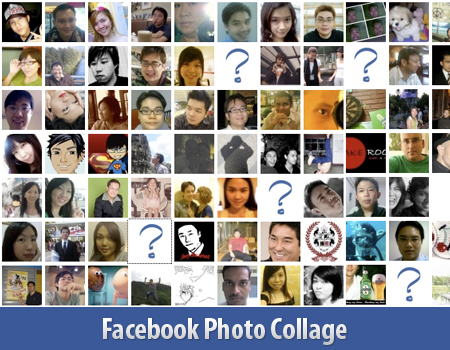
3.Create Photo Collage/Grid-View Of Your Facebook Friends


Here’s a small little trick in Facebook that allows you to create a grid view or photo collage out of your friends list. This is how I do it:

1. Click on Friends tab.
2. Proceed to More tab.
3. From "Choose an option" drop down, choose any of the dashes "—" 
Photos of all your friends will be displayed, each in 50×50 pixels forming a grid view. Have fun.


Saturday, March 9, 2013

Fact About Cakes


1. Cakes were a part of strange rituals million years ago. Have you heard of Celtic people? They celebrate a festival by name Beltane festival. During this festival, they lit bonfires atop a hill and will roll down round cakes from the hill. If the cake doesn’t break, they believe it will bring good fortune.

2. Cakes definitely play a major role during wedding, but how these wedding ceremonies were completed during ancient times? They either break a big bread loaf on top of the bride’s head or simply throw pieces of bread on her.

3. Stack cakes, what are they? What is a stack? According to dictionary.com, stack is a more or less orderly pile or heap. These cakes are definitely special, do you know why? When a couple invites their friends and relatives for their wedding, it was a custom to bring a layer of cake. Each layer is stacked with apple butter. The popularity of the couple is determined by the height of the cake layer.

4. Do you like cheesecakes? I love them…yummy, delicious; how old are these cheesecakes? It is believed that these cakes are present since the bygone era. During the first Olympic Games, athletes were given cheesecakes.

5. Whoopie pies, what are they? Cakes whose middle layer is covered with frosted cream are known as Whoopie pies. Why are they called as Whoopie pies? When farmers went out for work, Amish women wanted to give them a treat; therefore, they baked these pies and sent them in the lunchbox. These men were surprised to see a pie in their lunchbox and cried “Whoopie.” This is how these pies got this name. Interesting?

6. Have you heard of those big “babka” cakes? These were traditional cakes baked by Slavic people. What is so special about these babka cakes? The dough was laid down on an eiderdown prior to actually baking the cake in the oven. These were prepared by women folks and men are not supposed to come into the kitchen till the cake is baked. They also believed that to bake the cake, there must be no noise. They don’t even whisper while baking this cake.

7. During the 17th century, in England, people believed that keeping fruitcakes under the pillow of those who are unmarried will give them sweet dreams about their fiancée. Wow…isn’t this really a sweet dream!

8.The Oxford Dictionary of Superstitions cites examples of cakes being made for superstitious reasons. A ‘soul cake’, in various parts of England, is made on All Souls’ Day and kept for good luck, while a ‘burial cake’ was kept close to the head of a dead person, and one had to have a piece of the cake in one’s mouth when looking at the body.

9. The French word for cake – gateau – entered the English language in the 19th century and was often used to refer to a savoury dish that included meat. The OED has citations for ‘veal gateau’ and ‘fish gateau’.

10. Birthdays used to be celebrated quite differently, as the first birthday cake was originally a cake given as an offering on a person’s birthday. The first citation of ‘birthday cake’ in the OED, from 1785, reads ‘His birth-day cakes crowd on him in such store, The house abounds.’


Friday, February 8, 2013

Fact about Ice Cream...


  • It takes 12 lbs. of milk to make just one gallon of ice cream. Wonder how they fit it all in one carton?
  • It takes an average of 50 licks to polish off a single-scoop ice cream cone. Challenge your family to a Lick-a-Thon, and see who finishes first!
  • The biggest ice cream sundae in history was made in Edmonton, Alberta, Canada, in 1988, and weighed in at over 24 tons. You can't order that in an ice cream parlor! 
  • In 2003, Portland, Oregon bought more ice cream per person than any other U.S. city. Looks like everyone else has a lot of catching up to do!

  • The ice cream cone's invention is linked to the 1904 World's Fair in St. Louis. An ice cream vendor reportedly didn't have enough dishes to keep up with the demand, so he teamed up with a waffle vendor who rolled his waffles into cones!

  • Hawaii has a fruit known as the ice cream bean or the monkey tamarind that actually tastes like vanilla ice cream! 

  • Legend has it that the Roman emperor Nero used to send his slaves scurrying to the mountains to collect snow and ice to make flavored ices, the precursors to ice cream, in the first century.

  • Americans consume the most ice cream in the world per capital, with Australians coming in second. In 1924, the average America ate eight pints a year. By 1997, the International Dairy Foods Association reported that the figure had jumped to 48 pints a year.

  • Vanilla is the most popular flavor in this country, snagging anywhere from 20 to 29 percent of sales. Chocolate comes in a distant second, with about 9 to 10 percent of the market.

  • Immigrants at Ellis Island were served vanilla ice cream as part of their Welcome to America meal.
  
  • One of the major ingredients in ice cream is air. Without it, the stuff would be as hard as a rock.

  • Among the most unusual flavors of ice cream ever manufactured are avocado, garlic, azuki bean, jalapeno, and pumpkin. Perhaps the weirdest of all: dill pickle ice cream , which was marketed to expectant mothers. Sales were disappointing.

 
  • One out of every five ice cream eaters share their treat with their dog or cat. (Can the day of liver- or tuna-flavored ice cream be far behind?)

  • In 1984, President Ronald Reagan declared July as National Ice Cream Month, citing the food's "nutritious and wholesome" qualities. He decreed that patriotic Americans should mark the month with "appropriate ceremonies and activities."

  • According to the Guinness Book of World Records, the biggest ice cream sundae in the world was made in Alberta, Canada, in 1988. It weighed nearly 55,000 pounds. The same year, a baking company and a sheet-metal firm in Dubuque, Iowa, teamed up to produce the world's largest ice cream sandwich, which tipped the scales at nearly 2,500 pounds. And, in 1999, Baskin-Robbins created an ice cream cake at a beach hotel in the United Arab Emirates that weighed just under 9,000 pounds.

  • Ice cream novelties such as ice cream on sticks and ice cream bars were introduced in the 1920s. Seems like kid stuff, but today, adults consume nearly one-half of all such treats.

  • While popular lore claims that the ice cream cone was invented at the 1904 World's Fair in St. Louis, a New York City ice cream vendor actually seems to have created the cone in 1896 to stop customers from stealing his serving glasses. He patented the idea in 1903 and it took off in popularity at the World's Fair the next year.

  • Forgot to take the ice cream out of the freezer to soften it up? Just microwave the carton for 10 to 15 seconds, and scooping will be a breeze.


Tuesday, February 5, 2013

Facts About Moon


When Neil Armstrong took that first historical step and said "That's one small step for man, one giant leap for mankind" it would not have occurred to anyone that the step he took in the dust of the moon was there to stay. It will be there for millions of years because there is no wind on the moon. That is, assuming the downdraft from the Command Module upon takeoff back into space didn't destroy the print. Buzz Aldrin reportedly saw the American flag, much further away, blow over during launch. Nevertheless, any footprints made by the famous astronauts undisturbed by takeoff are, in fact, there to stay.

The surface area of the moon is 14,658,000 square miles or 9.4 billion acres

Only 59% of the moon's surface is visible from earth.

The moon rotates at 10 miles per hour compared to the earth's rotation of 1000 miles per hour.

When a month has two full moons, the second full moon is called a blue moon. Another definition of a blue moon is the third full moon in any season (quarter of year) containing 4 total full moons.

From Earth, we always see the same side of the moon; the other side is always hidden.

The dark spots we see on the moon that create the image of the man in the moon are actually craters filled with basalt, which is a very dense material.

The moon is the only extraterrestrial body that has ever been visited by humans. It is also the only body that has had samples taken from it.

The first space craft to send back pictures from the moon was Luna 3 (built by the Soviet Union) in October 1959.

The moon has no global magnetic field.

The moon is about 1/4 the size of the Earth


Monday, February 4, 2013

Facts about Valentine’s Day


On 14th February world Celebrate Valentine's Day, as Valentine's Day comes once more, with flowers, chocolates and gifts let's take a look the secrets of this day.Know all about the facts that tell the story behind the Valentine's Day.


  • Valentine’s Day was first introduced to Japan in 1936 and has become widely popular.

  • 73% of people who buy flowers for Valentine's Day are men, while only 27 percent are women.

  • Approximately 110 million roses, mostly red, will be sold and delivered within the three-day Valentine's Day time period.

  • The most fantastic gift of love is the Taj Mahal in India. It was built by Mughal Emperor Shahjahan as a memorial to his wife.

  • Every Valentine's Day, the Italian city of Verona, where Shakespeare's lovers Romeo and Juliet lived, receives about 1,000 letters addressed to Juliet.

  • Red hearts are a ubiquitous Valentine symbol. Red is traditionally associated with the color of blood. At one time, people thought that the heart, which pumps blood, was the part of the body that felt love. In fact, when the Egyptians mummified their dead for burial, they removed every organ but the heart because they believed the heart was the only part of the body necessary for the trip through eternity.

  • More than 36 million heart-shaped boxes of chocolate are sold for Valentine's Day each year.
  • Alexander Graham Bell applied for his patent on the telephone, an "Improvement in Telegraphy", on Valentine's Day, 1876.

  • In some Latin American countries Valentine's Day is known as "Día del Amor y la Amistad" (Day of Love and Friendship)


Wednesday, January 9, 2013

Dayata Kiula 2013 Ampara


The 7th Deyata Kirula for 2013 will be held on Ampara  Hardy Technical Institute  this year, starting February 04, to coincide with the Independence Celebrations.Accordingly the exhibition will be held till the 10th of February, 
  A large number of people, both local and foreign are due to participate in the exhibition. All arrangements have been made by the Deyata Kirula Secretariat. The monetary provisions have been made for all development work such as Education, Health Services, Electricity Extension, Road Development and Infrastructure facilities for departments at provincial level. All heads of the Departments in the Eastern Province are keen on attending the exhibition.

The Eastern Provincial Council is giving its fullest cooperation to make this event a success. Various departments in the Eastern Provincial Council are busy erecting stalls for the exhibition.

what do you know about your Cellphone?


There is no question cell phone has completely changed the way that the world lives. From America to Africa, there isn't a continent that hasn't been affected by this technology. The sweeping popularity of the cell phone is unprecedented in World History.


  • It is estimated that 250-300 million cell phones are currently being used in the U.S.
  •  There is one cell phone for every two people in the world, which is a grand total of about 3.3 billion cell phones that are actively in use.
  •  There are more than 30 African nations that have more cell phones than land mines.
  •  More than 1,000 cell phones are activated each minute.
  • According to recent information from the FDA cell phones do not pose a health hazard. They do emit low levels of radio frequency (RF) energy, but there has been no proof that the level of RF produced, causes any health issues. One can reduce any perceived risk by using a hands free device, which significantly reduces the small amount of RF energy that a cell phone user is exposed to.
  •  A study by the University of Michigan’s Institute for Social Research showed that 83% of people believe that cell phones make their lives easier. The cell phone even beat out the Internet in this survey.
  •  Technology has come a long way in just a few short decades. Evidence of this can be seen in the fact that an iPhone has more processing power than the North American Air Defense Command did in 1965.
  •  Cell phones can help authorities find an owner’s location if he is ever lost or injured. Of course, calling 911 is always best, if possible, but if one is unable to send out a call, his location can be tracked based on the towers that his cell phone is pinging. A cell phone does have to be turned on in order to ping towers, so if one is trying to conserve battery, one should make sure that it is turned on now and then so that there will be a record of the towers that his cell phone has been pinging. It does not give an exact location, but if a person is missing, searchers will have a basic area to cover based on that person’s cell phone’s signals. This is why, if one is able to call 911 and give a specific location, that is the best way to get help. But cell phones are important to have nearby in case of any emergency.
  •  Cell phones can be recycled. There are many great non-profit groups who are willing to take old cell phones and refurbish them for needy people such as military men and women who are stationed overseas. Not only is this a great way to be Eco friendly, but it also provides the heroes of this country with a way to stay in touch with their family while overseas. Unfortunately, only 2.3% of Americans recycle their old cell phones and 7% throw them away. This is because over 70% of Americans are not aware that cell phones can be recycled. 
  • The world's first mobile phone call was made in 1973 by Motorola employee Martin Cooper from the streets of New York City.   


The world's most popular phone is the Nokia 1100, a basic GSM candybar launched in 2003. Over 250 million 1100s have been sold. Nokia's 3210 and 3310 also made the top five, while the last slot belongs to the iconic Motorola RAZR.

Tuesday, January 8, 2013

What do you know about your Eyes??


1.About 80 % of what we perceive comes through the eyes. Our memories are made 80 % by images. The eye comes with information about the depth, distance, shape, color and movement of the objects. 


2.The human eye is one of nature's wonders and functions like a photo camera. Only that is much more complex. 

  An adult eye has about 24 mm (1 inch) in diameter and about 12 million photo receptors (light sensitive cells) and six muscles that move the ocular sphere with such a precision that it allows the eye to follow moving objects. Like a camera, the eye has a diaphragm (called iris), whose opening (called pupil) degree adapts to the brightness of the environment. In weak light, the pupil will be large, to let more light inside. This happens for example in the dark or twilight. In the daylight, the pupil is small. The iris gives the eye's color. 

  The pupil can increase its size also under the effect of strong emotions (fear, sexual turn on). 

  The light rays that cross the pupil have been previously concentrated by the powerful action (till 45 dioptres) of the cornea, a transparent salient layer. The cornea is the front part of the white membrane of the eye, called sclerotica, which is rich in blood vessels. The cornea is devoid of blood vessels. Between cornea and iris-crystalline, there is the watery humour, that cleans and feed the cornea. 

  The crystalline lens is charged with the focusing of the light and its refraction index (between 19 and 38 dioptres) is adjusted by the ciliary muscles. When we look at a remote object, the crystalline relaxes and flattens. When looking at a close object, the crystalline 

  turns convex. 

3.After crossing the vitreous humour, the light reaches the retina, a membrane possessing 130 photosensitive rods and 7 million color photosensitive cones. On the retina an upside down image is formed, a photo that is reverted by the brain. 

  The rods and the cones turn the light into electric signals which are transmitted through the ganglionic cells to the optic nerve and from there they reach the brain. 

  Rods are extremely sensitive to light, but they can distinguish only blue and green. The cones distinguish clear and colored images, but they require strong light. That's why in the dark, images are not clear and all appears in blue and green. Rods use vitamin A, that's why carrots, cabbage and other green vegetables benefit the eye. 

4.Human eye can detect 10 million color hues, but cannot see ultraviolet or infrared light. Insects can see the ultraviolet light. 

  Birds have yellow fatty filters in their cones that allow them to differentiate hues of green and detect easily homocromous (having the same color with) leaf color mimicking insects, which are practically invisible at just one look for humans. 

5.The human eye sees basically three colors: red, green and blue. These are basic colors. The white is a combination of the three, the black is their lack. Yellow, purple or mauve form through the combination of two basic colors; these are called secondary colors. 

6.The fore eyeball and the inner eyelids are covered by a transparent layer called conjunctive. While blinking, the conjunctive and the tears (produced by the Harder glands in the inner corner of the eye) moisturize and clean of dirt and dust the cornea. 

  We blink once or twice at 10 seconds, and a blink lasts 0.3 seconds. In 12 hours, we blink 25 minutes. Infants starts blinking at the age of 6 months. 

  Tears drain into the nasal cavity and are more abundant in case of dust or dirt. Strong emotions also cause abundant tearing (weeping). 

7.Most cones are agglomerated in a region of the retina called macula lutea ("yellow spot"). That's why to clearly see a thing, we have to move the eyes, so that the projection is formed on macula lutea. Close to macula lutea, there is a blind spot where the optic nerve goes out of the eye. 

8.Eyes are protected in bony eyesockets, sheathed with a fatty tissue, so that usually, the socket is more harmed that the proper eye. 

9.Because the eyes watch the environment from different angles, they send different information to the brain. The brain "learns" from the first days to assemble the two images, so that we do not see a double image. But the difference between the two images helps the brain detect the location of the objects in the space and distance. This is the tridimensional vision, provided by binocular sight (when the field of the two eyes interpose). 

  Arboreal and predatory animals need this type of sight for moving on the branches or hunt. 

Prey animals have usually lateral positioned eyes. Their fields do not interpose (this is monocular vision). They cannot assess distances well, but this way have larger visual fields, overlooking the environment for predators. 

10.Why do we see blurry underwater? This has to do with the refraction indexes. Air has the refraction index 1, cornea and water about 1.33. The human crystalline cannot focus properly the light when experiencing the refraction index of the water, that's why we see underwater things as being blurry. The issue is eliminated with diving glasses which put a layer of air before the eyes. 


  • Eyes Are the most complex organs you possess except for your brain.

  • Eyes Are composed of more than two million working parts.

  • Eyes Can process 36,000 bits of information every hour.

  • Eyes Under the right conditions, can discern the light of a candle at a distance of 14 miles.

  • Eyes Contribute towards 85% of your total knowledge.

  • Eyes Utilize 65% of all the pathways to the brain.

  • Eyes Can instantaneously set in motion hundreds of muscles and organs in your body.

  • Eyes In a normal life-span, will bring you almost 24 million images of the world around you.

  • Eyes The external muscles that move the eyes are the strongest muscles in the human body for the job that they have to do. 
  • They are 100 times more powerful than they need to be.

  • Eyes The adult eyeball measures about 1 inch (2.5 cm) in diameter. Of its total surface area only one-sixth is exposed -- the front portion.

  • Eyes The eye is the only part of the human body that can function at 100% ability at any moment, day or night, without rest. 
  • Your eyelids need rest, the external muscles of your eyes need rest, the lubrication of your eyes requires replenishment, 
  • but your eyes themselves "never" need rest. But please rest them!
  • Eyes are your most precious sense... care for them properly!


Monday, January 7, 2013

Fact about shoes


Wearing shoes

Analysis of the relative sturdiness of middle and big toe bones has revealed that human beings started wearing footwear about 40,000 years ago.
The world’s first crafted foot coverings were most likely sandals: a stiff sole that attaches to the foot with a strap. They can be made out of whatever is at hand: papyrus in early Egypt, rawhide among the Masai, wood in India, rice straw in China, sisal in South America, yucca in the American Southwest.


  • Sandals originated in warm climates where the soles of the feet needed protection but the top of the foot needed to be cool.
  • 4,000 years ago the first shoes were made of a single piece of rawhide that enveloped the foot for both warmth and protection.
  • In Europe pointed toes on shoes were fashionable from the eleventh to the fifteenth centuries.
  • In the Middle East heels were added to shoes to lift the foot from the burning sand.
  • In Europe in the sixteenth and seventeenth centuries heels on shoes were always colored red.
  • Shoes all over the world were identical until the nineteenth century, when left- and right-footed shoes were first made in Philadelphia.
  • In Europe it wasn't until the eighteenth century that women's shoes were different from men's.
  • Six-inch-high heels were worn by the upper classes in seventeenth-century Europe. Two servants, one on either side, were needed to hold up the person wearing the high heels.
  • In 18th century legislation designed to create paved walkways within cities allowed women to wear less practical shoes with higher heels


  •  Boots were first worn in cold, mountainous regions and hot, sandy deserts where horse-riding communities lived. Heels on boots kept feet secure in the stirrups.
  • Sandals originated in warm climates where the soles of the feet needed protection but the top of the foot needed to be cool.
  • Biggest Shoes in the World: Marikina City owns the distinction of having crafted the world’s largest pair of shoes, each measuring 5.5 meters long, 2.25 meters wide and 1.83 meters high. The heel alone measures 41 centimeters or 16 inches. The P2-million shoes can reportedly fit to a 37.5-meter or 125-foot giant. Around 30 people could put their feet into the colossal shoes simultaneously.
  • Cinderella is the obvious first…then there’s Anderson’s “Little Match Seller”, who has her shoes stolen by ragamuffins. There’s also the girl from “The Red Shoes”, which is quite a creepy and wonderful story. The mermaid from “The Little Mermaid” feels as if she’s walking on knives all the time, though that isn’t really shoes. On to Grimm. There’s the little sister in “The Almond Tree” who gets a pair of shoes from her dead brother. There’s “The Shoemaker and the Elves”, though I don’t think that has anything to do with women, if that’s your topic. The girls in “The Twelve Dancing Princesses” wear out their shoes. If you want to go as far as Hoffman, Clara from “The Nutcracker” defeats the mouse king by throwing her shoe at him. Don’t forget the iron shoes in which Snow White’s stepmother dances to her death at the “happy ending” wedding.


Sunday, January 6, 2013

The Hottest scene on iss pyar ko kya naam doon 2012.


The serial iss pyar ko kya naam doon which off aired end of November is one of the popular serial on 2012.
2012 was a Hot year to  iss pyar ko kya naam doon viewers. It was a remarkable serial to the world whiled  Hindi Telly serial lovers..

Top 5 scenes of Serial Iss pyar ko kya naam doon


Saturday, January 5, 2013

INTERESTING FACTS ABOUT SLEEP ..


1. The record for the longest period without sleep is 18 days, 21 hours, 40 minutes during a rocking chair marathon. The record holder reported hallucinations, paranoia, blurred vision, slurred speech and memory and concentration lapses.


2. The “natural alarm clock” which enables some people to wake up more or less when they want to is caused by a burst of the stress hormone adrenocorticotropin. 


3. Tiny luminous rays from a digital alarm clock can be enough to disrupt the sleep cycle even if you do not fully wake. The light turns off a “neural switch” in the brain, causing levels of a key sleep chemical to decline within minutes.


4. Ducks at risk of attack by predators are able to balance the need for sleep and survival, keeping one half of the brain awake while the other slips into sleep mode.


5. Daytime naps improve memory! It also helps you remember important facts.

Naps also cut risk of heart disease.